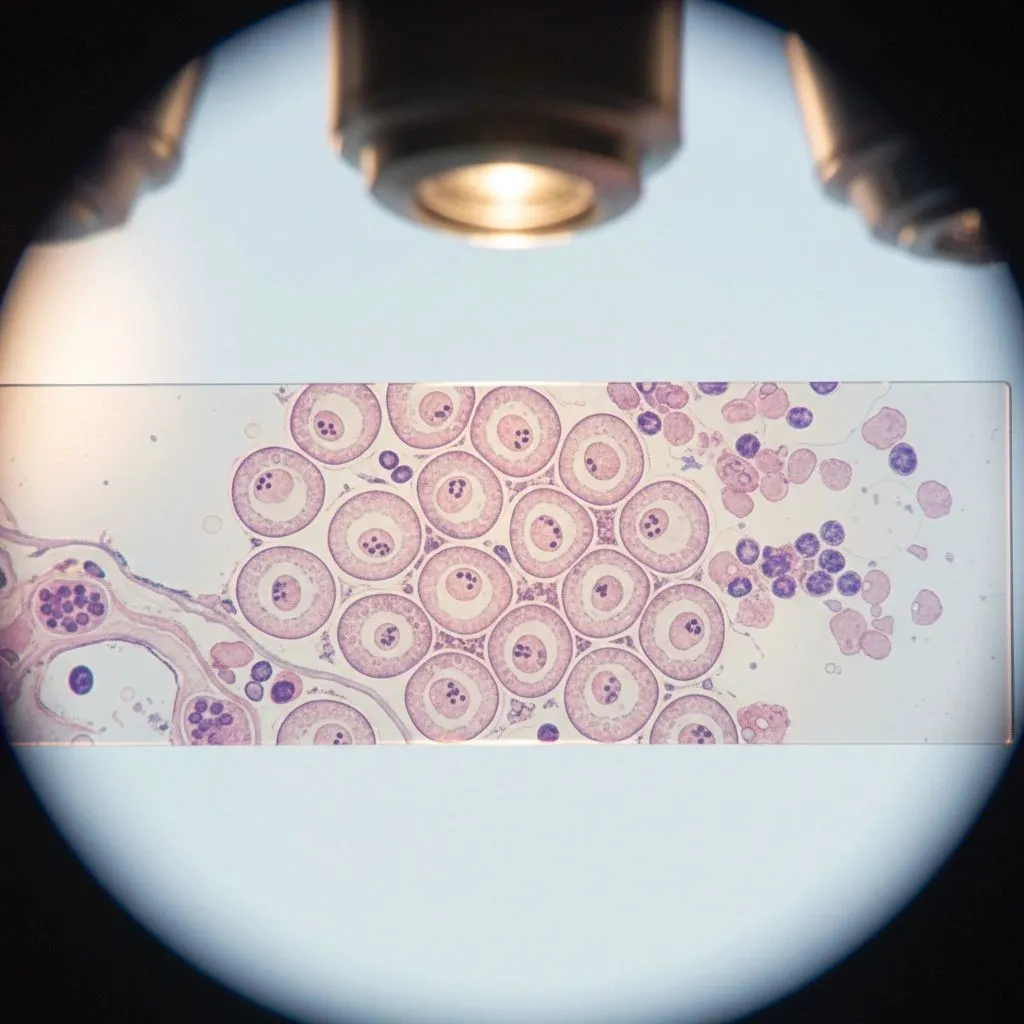
Bethesda 5 Thyroid Biopsy: Suspicious for Malignancy Explained
Written by John P. Sabra, MD, FACS | Updated May 2026
Educational only. This article is not medical advice. Always consult your physician about your individual situation.
A Bethesda 5 result means your biopsy is suspicious for cancer, but not yet definitive. The malignancy risk is roughly 60 to 75%. This is one of the harder results to receive, because it points strongly toward cancer without confirming it.
If you arrived here after receiving a Bethesda 5 result, take a breath. The result does not mean cancer is certain, and even if it is cancer, the most likely type (papillary thyroid cancer) is among the most treatable cancers in medicine. If you have not yet read the broader Bethesda system overview, start there: the Bethesda system guide covers all six categories. This article focuses specifically on what Bethesda 5 means and what the next several weeks typically look like.
What Bethesda 5 Means
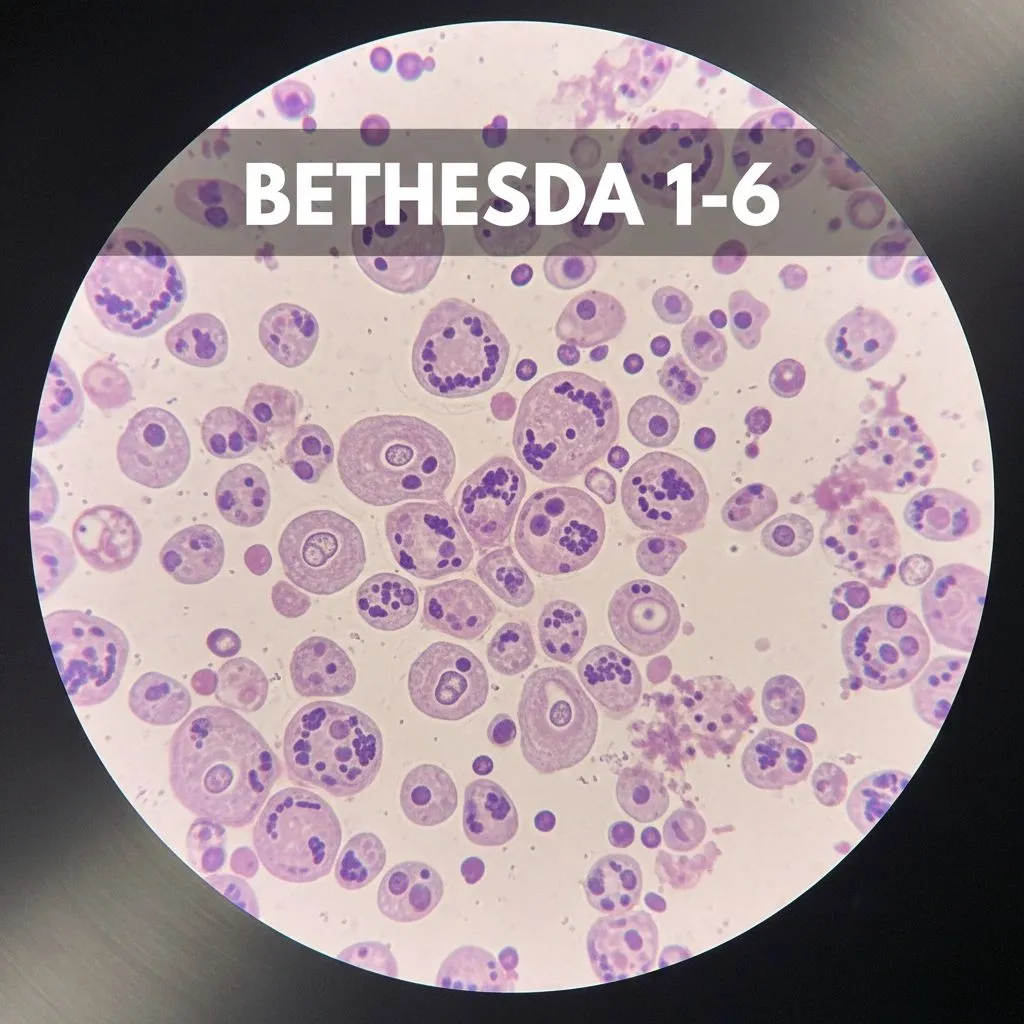
The Bethesda System for Reporting Thyroid Cytopathology is the standardized framework pathologists use to classify thyroid biopsy samples. Each biopsy is assigned to one of six categories, ranging from non-diagnostic (Bethesda 1) to malignant (Bethesda 6). Bethesda 5 sits in the second-highest tier and is described as suspicious for malignancy.
In plain terms, the pathologist looking under the microscope sees cells that are abnormal in ways that strongly suggest cancer, but the sample is not quite definitive enough to call it cancer outright. The cells may show some but not all of the features required for a confident malignant diagnosis. The architecture may be ambiguous, the sample may be limited in quantity, or the appearance may be atypical in ways that fall just short of the threshold for Bethesda 6.
The 60 to 75 Percent Risk Number, What It Actually Says
Across published series of thyroid biopsies that ended up resected, roughly 60 to 75% of nodules classified as Bethesda 5 turned out to be malignant on final pathology after surgery. This is the figure cited by the 2017 update to the Bethesda System and by the American Thyroid Association guidelines.
The number means two important things at once. First, the result is heavily weighted toward cancer. Out of four people with the same Bethesda 5 result, roughly three will have cancer confirmed at surgery. Second, the result is not 100%. About one in four Bethesda 5 nodules turn out to be benign on final pathology, which is the reason the result is called suspicious rather than malignant. Surgery is the diagnostic step that converts the suspicion into an answer.
The 60 to 75% figure is an average across many studies and many pathologists. Your individual risk depends on the specific cytologic features the pathologist noted, the size and ultrasound features of the nodule, and your clinical context. Asking your surgeon to walk you through your specific report (not just the Bethesda category) is one of the more useful conversations you can have.
Why You Don’t Have a Definitive Answer Yet
A fine-needle aspiration biopsy samples a small number of cells from a nodule using a thin needle. The pathologist examines those cells under the microscope and judges whether they look benign, atypical, suspicious, or malignant. For some nodules, the diagnostic features are unmistakable and the answer is clear. For Bethesda 5 nodules, the features are concerning but incomplete.
Three things can produce a Bethesda 5 rather than a Bethesda 6 result:
- The sample contains too few abnormal cells to make a confident malignant call
- The cellular features are partially but not fully diagnostic of a specific cancer
- The architecture suggests a follicular pattern, where definitive diagnosis often requires examining the whole nodule, not just sampled cells
The follicular pattern point is important. Follicular cancers are typically diagnosed by examining the entire capsule of the nodule for invasion, which a needle biopsy cannot do. A nodule with follicular architecture and atypical features is often categorized as Bethesda 4 or 5 rather than Bethesda 6, because the architecture forces a definitive answer to wait until the whole nodule has been removed and examined.
What Surgery Looks Like for Bethesda 5
For most Bethesda 5 nodules, surgery is the recommended next step. The two main options are a thyroid lobectomy (removal of the lobe containing the nodule) or a total thyroidectomy (removal of the entire thyroid). Recent guidelines have shifted toward lobectomy as a first-step diagnostic and treatment option for many Bethesda 5 nodules under 4 cm without other concerning features. The choice depends on the nodule’s size, ultrasound features, your overall thyroid health, your preferences, and any prior history of radiation or family history of thyroid cancer. Read more about thyroid lobectomy and total thyroidectomy to understand the differences.
Lobectomy vs Total Thyroidectomy
This is one of the more important decisions you will make in the next several weeks. Each approach has clear advantages and clear trade-offs.
| Factor | Lobectomy (one side) | Total thyroidectomy (both sides) |
|---|---|---|
| What it removes | Half of the thyroid, the side with the nodule | The entire thyroid gland |
| Diagnosis | Provides definitive diagnosis from the removed lobe | Provides definitive diagnosis and treats both lobes |
| Lifelong medication | Roughly 25 to 35% of patients still need replacement | Required for all patients |
| Risk to vocal cord nerves | One side at risk | Both sides at risk |
| Risk to parathyroid function | Lower; only one side dissected | Higher; all four parathyroid glands at risk |
| If cancer is confirmed | May need a completion thyroidectomy if features are high-risk | No second operation needed |
| Recovery | Faster, often back to work in 1 to 2 weeks | Similar incision but more anatomy disturbed |
The right choice for you depends on details that go beyond the Bethesda category, including the nodule’s size and imaging appearance, the status of the opposite lobe, your age, family history, and your tolerance for the possibility of a second operation. This is exactly the type of decision worth a careful conversation with a surgeon who does thyroid surgery frequently.
If your nodule has high-risk ultrasound features (TR5 features, microcalcifications, irregular margins), or if there are abnormal lymph nodes on imaging, total thyroidectomy is more often recommended even when the biopsy is Bethesda 5 rather than Bethesda 6. The combination of imaging and cytology drives the decision, not the cytology alone. Genetic testing results may also influence this decision if there are suspicious genetic markers present.
Questions to Ask Your Surgeon
When you sit down with the surgeon for your consultation, having a short list of questions ready will make the appointment more productive. Useful ones include:
- How many thyroid surgeries do you perform per year?
- What is your rate of permanent vocal cord nerve injury and permanent hypoparathyroidism?
- Based on my biopsy and imaging, do you recommend a lobectomy or a total thyroidectomy, and why?
- What is the chance that I will need a second operation if cancer is confirmed?
- Will you use intraoperative nerve monitoring? Will you use a near-infrared device for parathyroid identification?
- How long is the typical recovery, and when can I return to normal activity?
The Bottom Line
Bethesda 5 means suspicious for cancer, with a 60 to 75% chance of malignancy on final pathology. Surgery is the standard next step, and for most patients the right operation is either a lobectomy or a total thyroidectomy depending on the nodule’s size, features, and your overall context. If your nodule is on the smaller side and the imaging is not high-risk, a lobectomy can both make the diagnosis and treat the disease in one operation. Read about Bethesda 6 (definitive cancer) for context, and use the next several weeks to identify a high-volume thyroid surgeon for your operation.
References
- Haugen BR, et al. 2015 ATA Management Guidelines for Thyroid Nodules and DTC. Thyroid. 2016.
- American Thyroid Association — Fine-Needle Aspiration Biopsy of Thyroid Nodules.
- ATA Professional Guidelines.
This article was written by John P. Sabra, MD FACS, and is intended for patient education only. It does not constitute medical advice and does not replace a consultation with your physician.
More from the Needle Biopsy (FNA) series


Ready to Talk to a Specialist?
A thyroid specialist can review your specific results, answer your questions, and help you understand exactly what your next steps should be. The ATLAS network connects you with experienced thyroid and parathyroid expert physicians who focus on thyroid disease.
Find a Thyroid Specialist Near You →