
Lateral Neck Dissection: The Most Extensive Thyroid Cancer Operation and What It Involves
Written by John P. Sabra, MD FACS
Updated May 2026
Educational only. This article is not medical advice. Always consult your physician about your individual situation.
When thyroid cancer has spread to the lymph nodes alongside the jugular vein in the lateral neck, the operation required is significantly larger than a standard thyroidectomy. Patients who need it deserve a clear understanding of what that means before surgery.
What the Lateral Neck Compartment Is
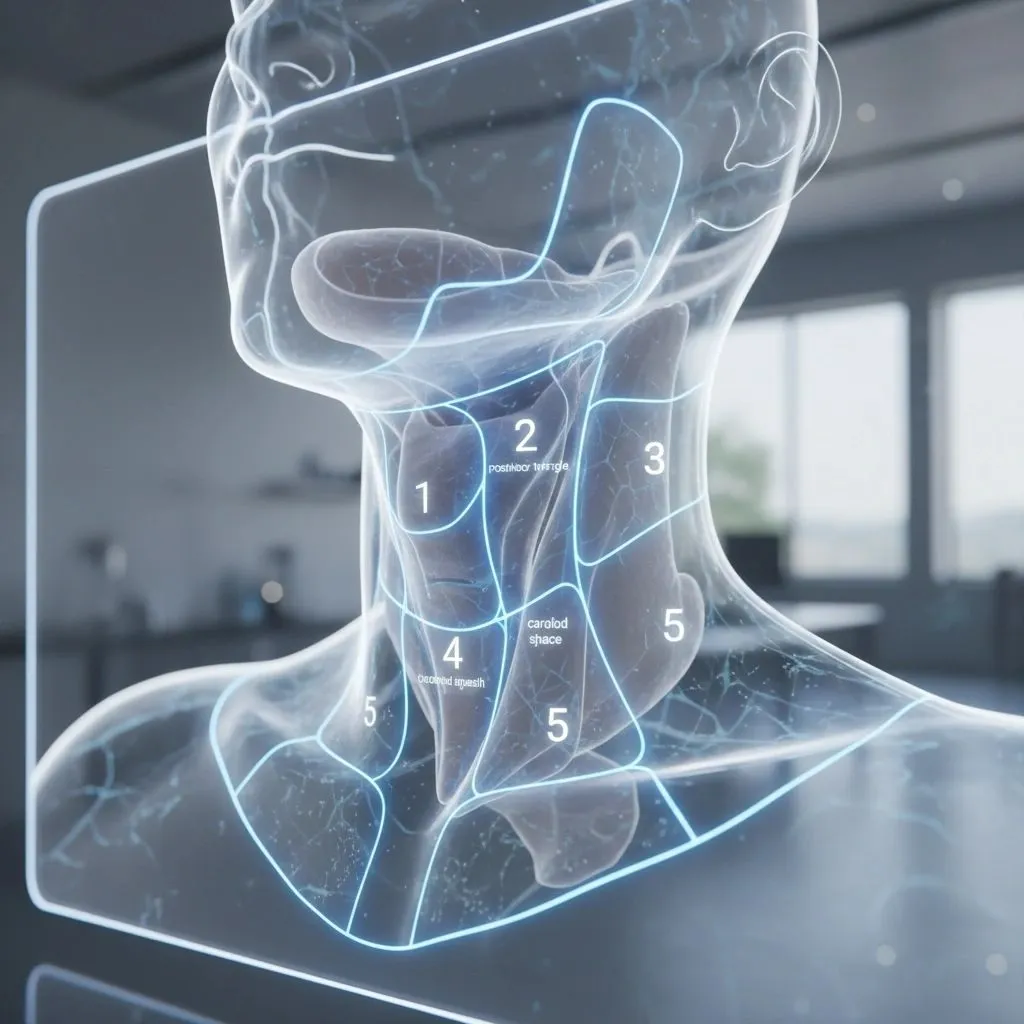
The lateral neck compartments (levels II, III, and IV on each side) run alongside the internal jugular vein from the base of the skull down to the clavicle — the large chains of lymph nodes most people can feel when they have swollen glands. In thyroid cancer, these nodes represent the second echelon of spread, typically following involvement of the central neck compartment.
A modified radical neck dissection removes the lymph node-bearing fatty tissue from these lateral compartments systematically, preserving the critical structures that run through the same territory: the internal jugular vein, the carotid artery, the sternocleidomastoid muscle, and the spinal accessory nerve. This “modified” preservation distinguishes it from the older radical neck dissection, which removed some structures. The modern operation addresses the disease while preserving form and function.
When Lateral Neck Dissection Is Performed
Lateral neck dissection is performed when there is confirmed or strongly suspected cancer involvement of the lateral neck lymph nodes. Unlike central neck dissection, where the prophylactic approach is debated, lateral neck dissection is almost never performed prophylactically — the operation is simply too large, and the risk profile too significant, to justify in the absence of confirmed disease. The typical trigger is a preoperative ultrasound identifying suspicious lateral neck nodes confirmed by biopsy showing thyroid cancer cells.
Why This Is a Significantly Larger Operation
Combined thyroidectomy, central dissection, and unilateral lateral dissection is one of the most extensive operations in head and neck surgery. The incision extends beyond the standard thyroid collar cut, typically running upward along the anterior border of the sternocleidomastoid muscle. Operating time typically runs three to five hours. A bilateral lateral dissection extends beyond that. Recovery is more demanding than from thyroidectomy alone — neck stiffness, shoulder discomfort, swelling, and drain management are all part of the immediate recovery period.
When cancer has spread to both sides of the lateral neck, both sides may need to be dissected. Doing both sides in a single operation is sometimes necessary, but it significantly increases operating time and recovery burden. Patients should ask their surgeon whether staging the procedure — addressing each side in separate operations several weeks apart — is a feasible option. Staging can allow more complete recovery between operations and may reduce the overall physiological burden, particularly in older patients.
The Risks of Lateral Neck Dissection
Spinal accessory nerve injury — this nerve controls the trapezius muscle responsible for shoulder elevation and movement. Even with preservation, the nerve can be stretched or temporarily traumatized, causing shoulder weakness or pain that may take weeks to months to resolve. Permanent injury is uncommon in experienced hands but warrants specific discussion.
Chyle leak — the thoracic duct enters the venous system in the left lower neck, and injury during left-sided lateral dissection can cause lymphatic fluid to drain into the wound or neck. This typically requires dietary modification to a low-fat diet and occasionally surgical reintervention.
Facial numbness — numbness along the earlobe and lower cheek from great auricular nerve division is common after lateral dissection and typically permanent, though most patients find it a minor inconvenience rather than a functional problem.
The management of lateral neck disease is not one-size-fits-all. A patient with a single 1.5 cm positive node has a different disease picture than one with a matted chain of ten involved nodes. Before consenting to a full modified radical neck dissection, ask your surgeon how many nodes were identified on imaging, whether all were biopsied or just the most suspicious, and whether the planned dissection is proportionate to the confirmed extent of disease.
The Bottom Line
Lateral neck dissection is a major operation with a complication profile that reflects its scope. When it is needed, it is absolutely the right operation, and performing it completely and correctly at the first attempt is far better than leaving disease behind and returning to an operated neck later. The surgeon performing your lateral neck dissection should have substantial experience with this specific operation. Ask how many lateral neck dissections they perform per year. The answer to that question matters.
References
- Haugen BR, et al. 2015 ATA Management Guidelines for Thyroid Nodules and DTC. Thyroid. 2016.
- American Thyroid Association — Thyroid Cancer.
- National Cancer Institute — Thyroid Cancer Treatment.
This article was written by John P. Sabra, MD FACS and is intended for patient education only. It does not constitute medical advice and does not replace a consultation with your physician. Decisions about lateral neck dissection require individualized evaluation by a surgeon with specific expertise in thyroid cancer and neck surgery.
More from the Surgical Procedures series



Ready to Talk to a Specialist?
A thyroid specialist can review your specific results, answer your questions, and help you understand exactly what your next steps should be. The ATLAS network connects you with experienced thyroid and parathyroid expert physicians who focus on thyroid disease.
Find a Thyroid Specialist Near You →