
Hypoparathyroidism: Living With Low Calcium Levels
Written by John P. Sabra, MD FACS
Updated May 2026
Educational only. This article is not medical advice. Always consult your physician about your individual situation.
Hypoparathyroidism is the opposite of hyperparathyroidism. Instead of too much parathyroid hormone, there is too little. The consequence is chronically low calcium, with symptoms that can range from mild tingling to severe muscle spasms and cognitive problems. It is an uncommon condition, but for the patients who have it, it requires daily attention and careful medical management.
What Hypoparathyroidism Is
Hypoparathyroidism is a condition in which the parathyroid glands do not produce enough parathyroid hormone to maintain normal blood calcium levels. The result is hypocalcemia (low calcium) and hyperphosphatemia (high phosphate), because PTH normally works to raise calcium and lower phosphate.
Unlike hyperparathyroidism, which is often described as a disease of the thermostat being set too high, hypoparathyroidism is a disease of the thermostat not working at all or working at a very low setting. The body cannot maintain adequate calcium levels without external help, and that help takes the form of lifelong calcium and vitamin D supplementation.
The Main Causes
Post-surgical hypoparathyroidism
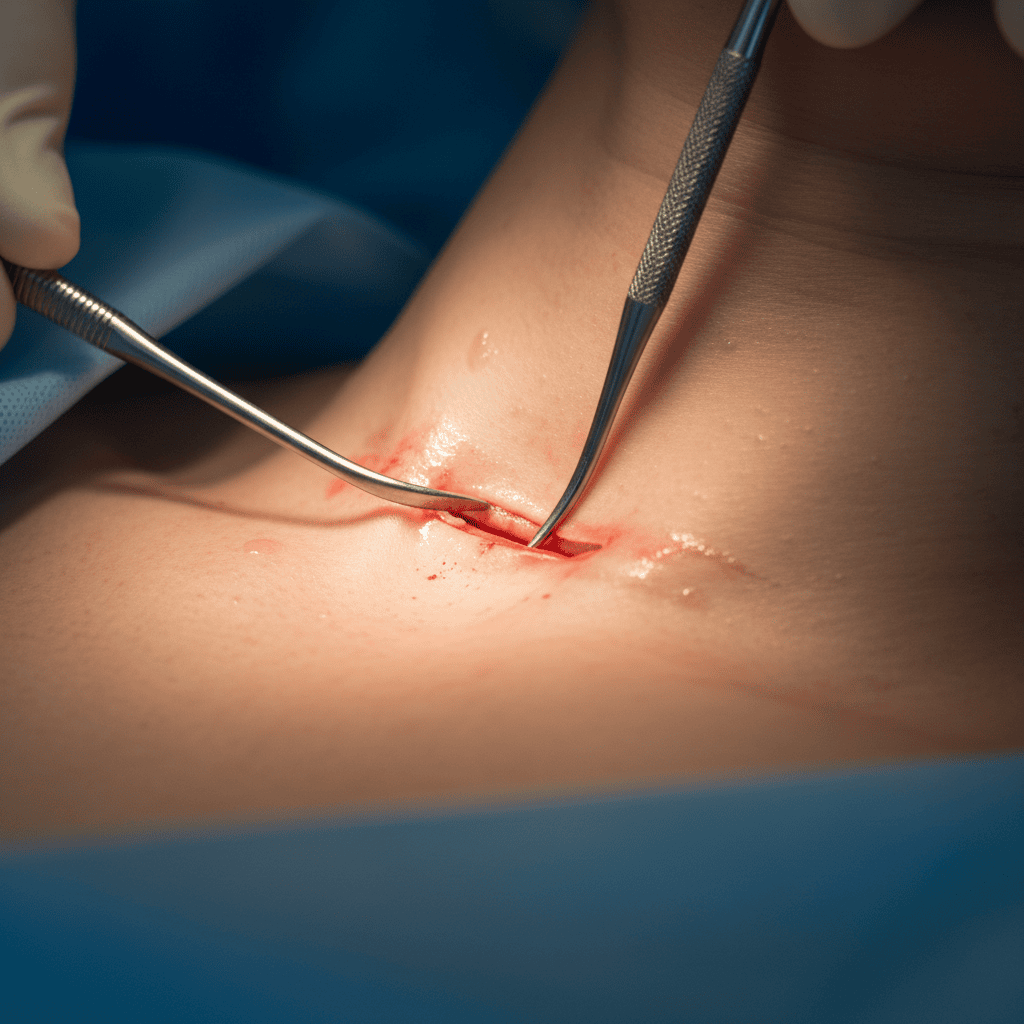
By far the most common cause of hypoparathyroidism is prior neck surgery. Approximately 75% of cases occur after thyroid surgery (particularly total thyroidectomy), central neck dissection for thyroid cancer, or parathyroid surgery. The parathyroid glands can be injured, devascularized, or inadvertently removed during these operations.
Most cases of post-surgical hypoparathyroidism are temporary. The parathyroid glands are bruised or have had their blood supply transiently disrupted, and function returns over weeks to months. In a smaller proportion of patients (ideally less than 1 to 2% in experienced hands for total thyroidectomy), the hypoparathyroidism becomes permanent, defined as persistence beyond 6 months after surgery. This is one of the most significant preventable complications of thyroid and parathyroid surgery, and its rate is a direct reflection of the surgeon’s skill and experience with parathyroid preservation.
The best treatment for post-surgical hypoparathyroidism is prevention. Choosing a high-volume thyroid surgeon who uses techniques to identify and protect the parathyroid glands (meticulous dissection, near-infrared imaging such as PTEye, autotransplantation of accidentally removed glands) is the single most important factor in avoiding this complication. Once permanent hypoparathyroidism is established, it is a lifelong condition.
Autoimmune hypoparathyroidism
Less commonly, the immune system attacks the parathyroid glands, causing them to fail. This can occur as an isolated condition or as part of a polyglandular autoimmune syndrome in which multiple endocrine glands are affected. Autoimmune hypoparathyroidism tends to develop gradually and may take years to become apparent.
Genetic causes
A small percentage of cases are caused by inherited conditions. DiGeorge syndrome, caused by a chromosomal deletion, is the most common genetic cause and results from abnormal development of the parathyroid glands. Other rare genetic conditions account for additional inherited cases.
Other causes
- Radiation treatment to the neck for head and neck cancers can damage the parathyroid glands over time
- Severe magnesium deficiency can suppress PTH secretion, producing functional hypoparathyroidism that resolves when the magnesium is replaced
- Iron overload conditions such as hemochromatosis can deposit iron in the parathyroid glands and impair their function
- Idiopathic hypoparathyroidism: in some patients, no underlying cause is identified
The Symptoms of Low Calcium
The symptoms of hypoparathyroidism are largely the symptoms of hypocalcemia, and they range from mild to severe depending on how low the calcium is and how quickly it has dropped. The nervous system and muscles are most affected because calcium is essential for nerve conduction and muscle contraction.
Early or mild symptoms
- Tingling or numbness around the mouth, in the fingers, or in the toes (called perioral or acral paresthesias)
- A sensation of pins and needles that moves or comes and goes
- Mild muscle cramping, often in the hands, feet, or calves
- Fatigue and mild cognitive difficulties (brain fog)
- Anxiety or a vague sense of unease
Moderate symptoms
- More prominent muscle cramping and spasms
- Carpopedal spasm: the hand assuming a characteristic flexed position at the wrist with extended fingers
- Chvostek sign (twitching of the face when the facial nerve is tapped) and Trousseau sign (carpopedal spasm triggered by inflating a blood pressure cuff above systolic pressure for 3 minutes)
- Tetany: sustained, involuntary muscle contractions
- Noticeable mood changes, depression, or difficulty with memory and concentration
Severe symptoms
- Laryngospasm or bronchospasm: airway muscles contract, causing breathing difficulty
- Seizures
- Cardiac arrhythmias, prolonged QT interval on ECG
- Altered mental status
Severe hypocalcemia is a medical emergency and typically requires intravenous calcium in the hospital. Mild to moderate symptoms are usually managed with adjustments to oral supplementation at home.
Diagnosis
The diagnosis is made by laboratory testing. The classic findings are:
- Low serum calcium (total calcium below the normal range, or low ionized calcium)
- Low or inappropriately normal PTH
- High serum phosphate
- Normal or slightly low magnesium (magnesium levels should always be checked because severe magnesium deficiency can mimic and worsen hypoparathyroidism)
Vitamin D status should also be assessed. Imaging of the kidneys may be performed to screen for nephrocalcinosis and kidney stones, which can develop from long-term calcium supplementation and altered urinary calcium handling.
Standard Treatment: Calcium and Active Vitamin D
The foundation of hypoparathyroidism treatment is lifelong oral calcium and active vitamin D supplementation. This does not replicate the normal physiologic function of the parathyroid glands, but it maintains blood calcium in a safe range and prevents severe symptoms.
| Medication | Purpose | Typical Considerations |
|---|---|---|
| Calcium carbonate or calcium citrate | Provides the calcium that the body needs and cannot absorb adequately without PTH | Calcium carbonate requires stomach acid to absorb and is taken with meals. Calcium citrate is absorbed without stomach acid and can be taken with or without food. |
| Calcitriol (active vitamin D) | Replaces the active form of vitamin D that PTH normally helps produce. Promotes intestinal calcium absorption. | Because calcitriol is already in its active form, it acts quickly but has a short half-life. Dosing is typically split through the day. |
| Cholecalciferol (vitamin D3) | Corrects any underlying vitamin D deficiency and provides a reserve of precursor | Used in addition to calcitriol, not as a substitute. |
| Magnesium supplementation | Corrects magnesium deficiency, which is common in hypoparathyroidism and worsens hypocalcemia | Oral magnesium can cause diarrhea at high doses. |
| Thiazide diuretics (selected patients) | Reduces urinary calcium loss, protecting kidney function in patients with high urine calcium | Used when urinary calcium is elevated despite normalized blood calcium. |
The goal is to maintain blood calcium in the low-normal range (typically around 8.0 to 9.0 mg/dL), not at the middle or top of the normal range. Keeping calcium too high increases the risk of kidney stones and kidney damage. The balance is delicate, and most patients require periodic adjustments to their medication doses based on lab results, symptoms, and life circumstances (pregnancy, illness, medication changes).
PTH Replacement Therapy: A More Recent Option
For most of the history of hypoparathyroidism treatment, the only option was calcium and vitamin D supplementation. In 2024, the FDA approved palopegteriparatide (Yorvipath), a once-daily injection that provides a prolonged-release form of parathyroid hormone. For patients who cannot achieve adequate calcium control with standard therapy, or who require very high doses of supplementation, PTH replacement can meaningfully improve quality of life and reduce the dose of calcium and active vitamin D required.
An older PTH replacement therapy (Natpara) has been discontinued. Palopegteriparatide is the only current option. Access is limited, insurance coverage varies, and the therapy is generally reserved for patients who are not well controlled on conventional treatment. Management by an endocrinologist experienced in hypoparathyroidism is important when considering or using PTH replacement.
Palopegteriparatide represents the first genuinely new treatment for hypoparathyroidism in decades. Patients who have struggled with poorly controlled symptoms on high-dose calcium and active vitamin D may benefit substantially. If you have hypoparathyroidism and have not had a conversation with your endocrinologist about PTH replacement as a treatment option, it is worth raising specifically.
Living With Hypoparathyroidism
Most patients with hypoparathyroidism can lead normal, productive lives, but the condition requires ongoing attention. Several practical considerations apply:
- Consistent medication dosing: calcium and calcitriol should be taken at consistent times, typically split through the day
- Regular lab monitoring: blood calcium, phosphate, magnesium, vitamin D, and kidney function are typically checked every 3 to 12 months depending on stability
- Kidney monitoring: periodic assessment for kidney stones and nephrocalcinosis, which can develop from the combination of low PTH and supplemental calcium
- Emergency preparedness: wearing a medical ID bracelet, carrying an emergency card with your diagnosis and medications, and knowing the early symptoms of significant hypocalcemia so you can respond quickly
- Illness and stress: illnesses, infections, and surgical procedures can destabilize calcium balance; close communication with your endocrinologist during these events is important
- Pregnancy: calcium requirements change during pregnancy and lactation and require specific monitoring and dose adjustments
The Bottom Line
Hypoparathyroidism is an uncommon but serious condition that requires lifelong management. For most patients, consistent calcium and active vitamin D supplementation maintains an adequate quality of life, though the condition imposes a meaningful daily treatment burden. For patients whose symptoms are not well controlled on conventional therapy, newer PTH replacement options offer a genuine improvement over what was previously available.
The most important factor in managing hypoparathyroidism is working with an endocrinologist experienced in this specific condition. This is not a disease that can be managed adequately with routine primary care alone. The balance of calcium and vitamin D, the monitoring for kidney complications, and the decision whether to pursue PTH replacement all require specialist input.
References
- Orloff LA, et al. American Thyroid Association Statement on Postoperative Hypoparathyroidism. Thyroid. 2018.
- Khan AA, et al. Evaluation and Management of Hypoparathyroidism: Guidelines from the Second International Workshop. J Bone Miner Res. 2022.
- NIH GARD — Hypoparathyroidism Information.
This article was written by John P. Sabra, MD FACS Austin, TX and is intended for patient education only. It does not constitute medical advice and does not replace a consultation with your physician. Individual patient circumstances and clinical judgment determine the appropriate management for every patient.
More from the Parathyroid Disease series



Ready to Talk to a Specialist?
A thyroid specialist can review your specific results, answer your questions, and help you understand exactly what your next steps should be. The ATLAS network connects you with experienced thyroid and parathyroid expert physicians who focus on thyroid disease.
Find a Thyroid Specialist Near You →